
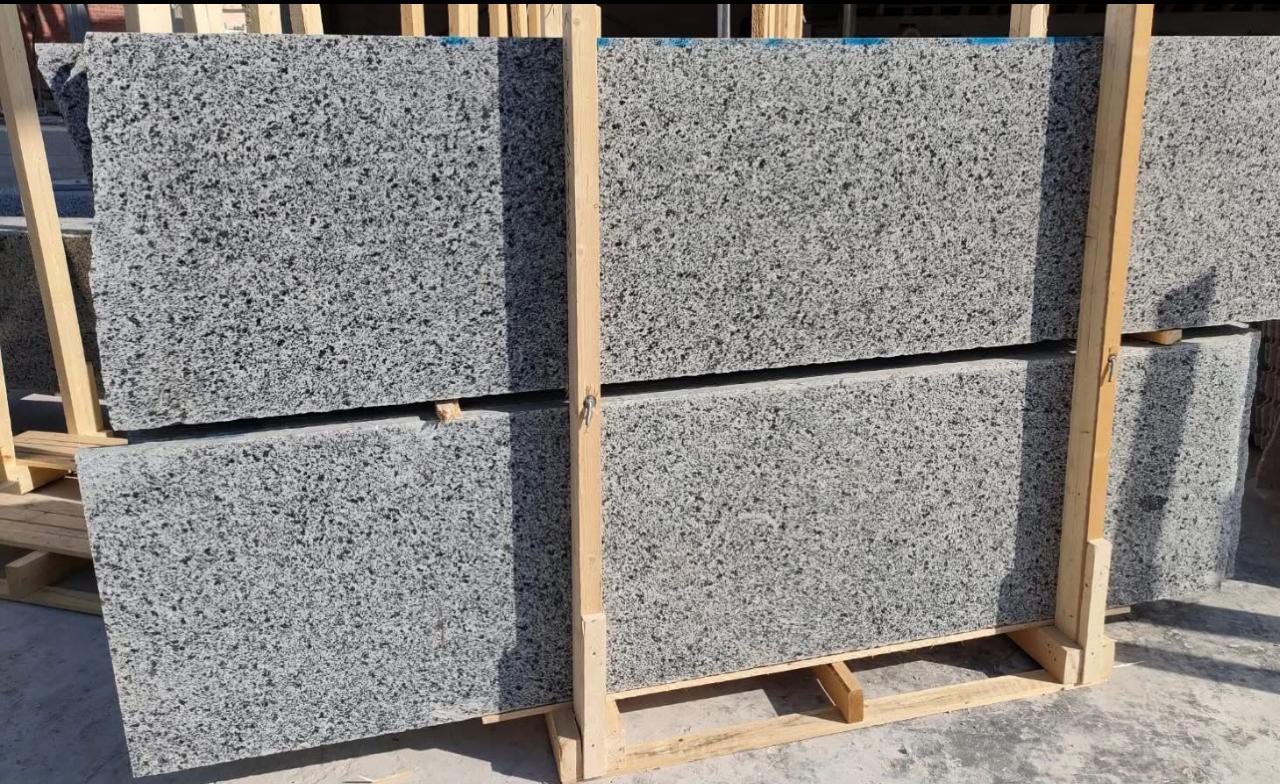
Egypt is one of the world’s major producers of natural stone. Its quarries in the Eastern Desert, around Aswan and along the Red Sea supply beige marbles such as Galala and a wide range of granites, and Egyptian stone is shipped to more than a hundred countries each year. This is how an import order usually works, from choosing the stone to receiving it.
1. Choose the stone
Start with where the stone will be used. Marble suits floors, walls and stairs; granite is the stronger choice for kitchen worktops, paving and facades. Our guide to choosing between marble and granite explains the differences. Then compare the varieties:
- Egyptian marble: Galala Extra, Samaha, Filetto, Melly Grey and Zafarana.
- Egyptian granite: Halayeb, New Halayeb, Red Aswan, Black Aswan, Gandola, Red Royal, Grey El Sherka, Rosa El Nasr and Rosa Hodi.
2. Specify exactly what you need
A precise request gets a precise quote. Include:
- Form: slabs, tiles, blocks or cut-to-size pieces.
- Dimensions and thickness: the exact sizes for tiles and cut-to-size pieces, and the thickness for slabs.
- Finish: polished, honed, flamed, sandblasted and others. See our guide to stone finishes.
- Quantity: in square metres for slabs and tiles, or in cubic metres for blocks.
- Destination: the country and port the goods should arrive at.
3. Agree on price and shipping terms
International stone orders are usually quoted under Incoterms, which set out who pays for each part of the journey. The two most common are:
- FOB (Free On Board): the seller delivers the goods onto the ship at the Egyptian port, and the buyer pays the sea freight and insurance from there.
- CIF (Cost, Insurance and Freight): the seller also pays the freight and insurance to the buyer’s port of destination.
Ask which terms a quote is based on, so you can compare offers fairly.
4. Confirm the stone before production
Natural stone varies from block to block in colour and veining. Before production starts, ask for photos or samples of the actual material, and agree on the finish and size tolerances in writing.
5. Packing and shipping
Slabs are normally shipped standing in wooden bundles or A-frames, and tiles packed in wooden crates, then loaded into containers. Good packing protects the edges and polished faces on a long sea journey.
6. Paperwork
An export shipment usually travels with a commercial invoice, a packing list, a bill of lading and a certificate of origin. Your country may ask for more, so check with your customs broker before the goods ship.
7. Check the delivery
When the container arrives, check the quantity against the packing list and inspect the stone for damage before installation begins.
Request an export quote
TH Marble & Granite has supplied Egyptian marble and granite since 1998 and exports to clients across Africa, Asia and Europe. Send us the stone, finish, dimensions, quantity and destination on the contact page or by WhatsApp, and see our export page for details.